All Categories
Featured
Table of Contents
That liberates cash in the short-term, and you might have 3 to 4 years to conserve towards the negotiation quantity. Extremely dangerous to credit history, mainly due to missed out on payments and an unfavorable "cleared up" mark that can remain on your credit rating report for up to 7 yearsMay be just alternative if other options (financial debt loan consolidation, balance transfer bank card, financial debt mercy) aren't possibleTypically requires a charge to the 3rd party, which can offset some or every one of the financial savings from financial debt settlementMay assist you prevent bankruptcy if you have actually missed numerous paymentsNot all financial institutions collaborate with financial debt negotiation firms Financial obligation mercy might be appropriate for you if you are experiencing an economic challenge that makes it almost impossible to pay for your financial obligation equilibriums.
With a DMP, you make one monthly settlement to the debt counseling firm. Those funds are after that distributed to creditors of your unsecured financial debts, such as credit report cards and installment finances. The company deals with your creditors to minimize rate of interest rates or forgo costs, yet some lenders may refuse such giving ins.
It can aid you pay down financial debt if you're able to secure a financing rate that's lower than the typical rate of the accounts you're settling. You should refrain from racking up debt on those freshly gotten rid of accounts or your debt might grow even higher.
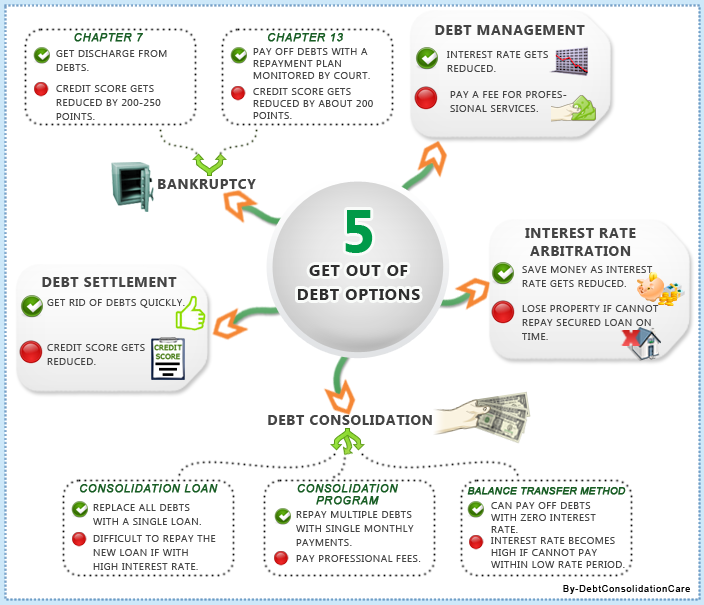
That provides you plenty of time to remove or considerably lower your equilibrium while making interest-free repayments.
Rumored Buzz on Comparing Debt Forgiveness Options in the Industry
You may require it if your creditor or a collection agency ever before attempts to accumulate on the financial obligation in the future. When a loan provider forgives $600 or even more, they are called for to send you Type 1099-C.
Financial obligation mercy or negotiation practically constantly injures your debt. Anytime you clear up a debt for less than you owe, it may show up as "cleared up" on your credit rating record and affect your credit report for 7 years from the date of negotiation. Your credit can additionally drop considerably in the months resulting in the forgiveness if you fall behind on payments.
The Best Guide To The Benefits to Consider When Considering Bankruptcy
This circumstance commonly results from underreporting income, not submitting returns on time, or disparities located throughout an Internal revenue service audit. The repercussions of accumulating tax debt are major and can consist of tax liens, which offer the Internal revenue service a lawful insurance claim to your property as protection for the financial debt.
Greater rates of interest on available credit score. Salaries and Financial institution Accounts internal revenue service can impose (take) earnings and savings account to please the debt. Decreased revenue and interruption of vital economic processes. Building Seizure In extreme instances, the IRS can take and offer residential or commercial property to cover the debt. Loss of important possessions and possible displacement.
Social Stigma Dealing with lawful action from the IRS can carry social stigma. Work Opportunities A poor debt rating due to tax debt can restrict employment opportunities. Government Advantages Tax financial obligation may influence qualification for federal government benefits, such as Social Protection and Medicaid.
What Does Understanding Bankruptcy Types and Requirements Mean?
The OIC takes into consideration numerous elements, consisting of the taxpayer's earnings, costs, asset equity, and capacity to pay. Successfully bargaining an OIC can be intricate, requiring a thorough understanding of the IRS's guidelines and a solid argument for why your offer lines up with your capability to pay. It is very important to note that not all applications are approved, and the process needs detailed monetary disclosure.
The internal revenue service analyzes your total monetary situation, including your income, expenditures, possession equity, and capability to pay. You should additionally be present with all declaring and payment demands and not be in an open bankruptcy proceeding. The internal revenue service likewise considers your conformity background, evaluating whether you have a document of prompt filing and paying taxes in previous years.
Fascination About Does Debt Forgiveness Suitable for You
The application process for an Offer in Concession entails a number of thorough steps. First, you must finish and submit internal revenue service Type 656, the Offer in Compromise application, and Kind 433-A (OIC), a collection details statement for individuals. These types need extensive monetary information, consisting of information about your income, debts, costs, and possessions.
Back taxes, which are unsettled tax obligations from previous years, can dramatically enhance your overall IRS financial debt otherwise attended to without delay. This debt can build up interest and late repayment penalties, making the initial quantity owed much larger with time. Failure to repay taxes can result in the internal revenue service taking enforcement actions, such as providing a tax obligation lien or levy against your residential property.
It is essential to address back taxes immediately, either by paying the sum total owed or by arranging a layaway plan with the IRS. By taking proactive actions, you can stay clear of the buildup of extra rate of interest and charges, and prevent more hostile collection actions by the IRS.
One typical factor is the belief that the taxpayer can pay the complete amount either as a round figure or through a layaway plan. The internal revenue service also thinks about the taxpayer's revenue, costs, asset equity, and future earning potential. If these variables suggest that the taxpayer can pay for to pay more than the provided amount, the internal revenue service is likely to turn down the offer.
Indicators on Red Flags When Selecting a Bankruptcy Provider You Need To Know
Dealing with Internal revenue service financial obligation can be intricate and daunting. Tax specialists, such as Certified public accountants, tax obligation lawyers, or signed up representatives, can provide indispensable assistance.

Latest Posts
Why Local Households Benefit from Credit Counseling
Discovering Competitive Combination Rates in San Antonio Debt Consolidation Without Loans Or Bankruptcy
Enduring the Credit Crunch in Your Area